
Doko no Kamae 怒虎の構え
“The position of an angry tiger”
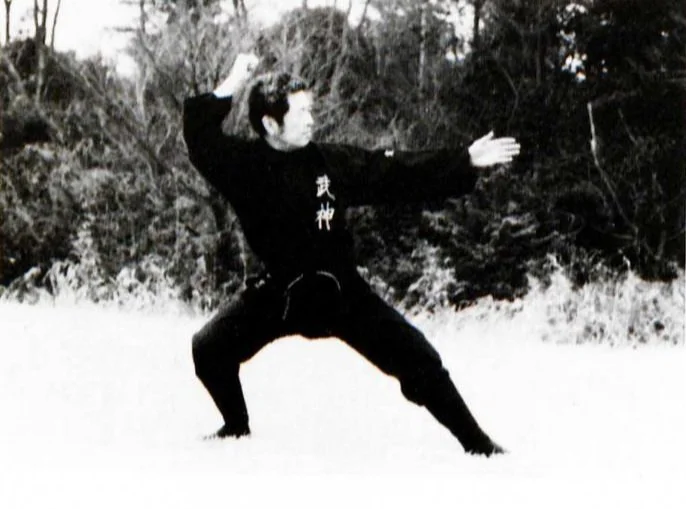
Photo: Masaaki Hatsumi, Togakure, 1983, p. 47
Level: Kyū
Source: TCJ
“Masaaki Hatsumi, TCJ, 1987: (イ) 左右の構え。相手眼遣臓遠当の事。(ロ)上,中,下段有り(ハ)大変術 (ニ)悟心の動作を行う(ホ)基本八法 (ヘ)捕手基本型変化 骨指基本型変化。
Translit.: (I) sayū no kamae. Aite metsuka tōate no koto. (Ro) Jō,-chū, gedan ari (Ha) taihen-jutsu (Ni) Goshin no dōsa o okonau (Ho) kihon happō (E) torite kihon-gata henka kosshi kihon-gata henka.”
Translation by Fluffy Tail: Left and right position. [The internal feeling] is like to hit [and destroy] the eyes of the opponent from a distance. There are high, middle and low forms [of this kamae]. [Used in] the art of changing body position, in making the action of "goshin". [Used in] Kihon happō, [used in] variations of the armlocks and [in] variations of basic striking forms.
Commentary:
Different view of Doko no kamae [TCJ, 1983, p. 46, pic. 7]
Occurs in: TCJ(Ten), Gyokko Ryū, Togakure Ryū (the position of the back hand is different from Gyokko Ryū, see below.)
Tipps from the Masters :
Carsten Kühn, Gyokko Ryū, p. 20: “Wütender Tiger Abwehrstellungen. In vielen chinesischen Kampfkünsten stellt diese Haltung der Arme einen springenden, angreifenden, Tiger dar. In der Gyokko Ryū sollten wir darauf achten, dass wir (mit Blick nach vorne zum Gegner) die hintere, erhobene Faust immer noch im Augenwinkel sehen.“
Carsten Kühn, Togakure Ryū, p. 23: “Anlich wie Ichi no Kamae ist diese Stellung weit und tief auf einer Linie, der Körper leicht nach hinten gelehnt. Die rechte Hand wird in Fudō Ken, mit dem Handrücken nach hinten, über den Kopf gehalten.”